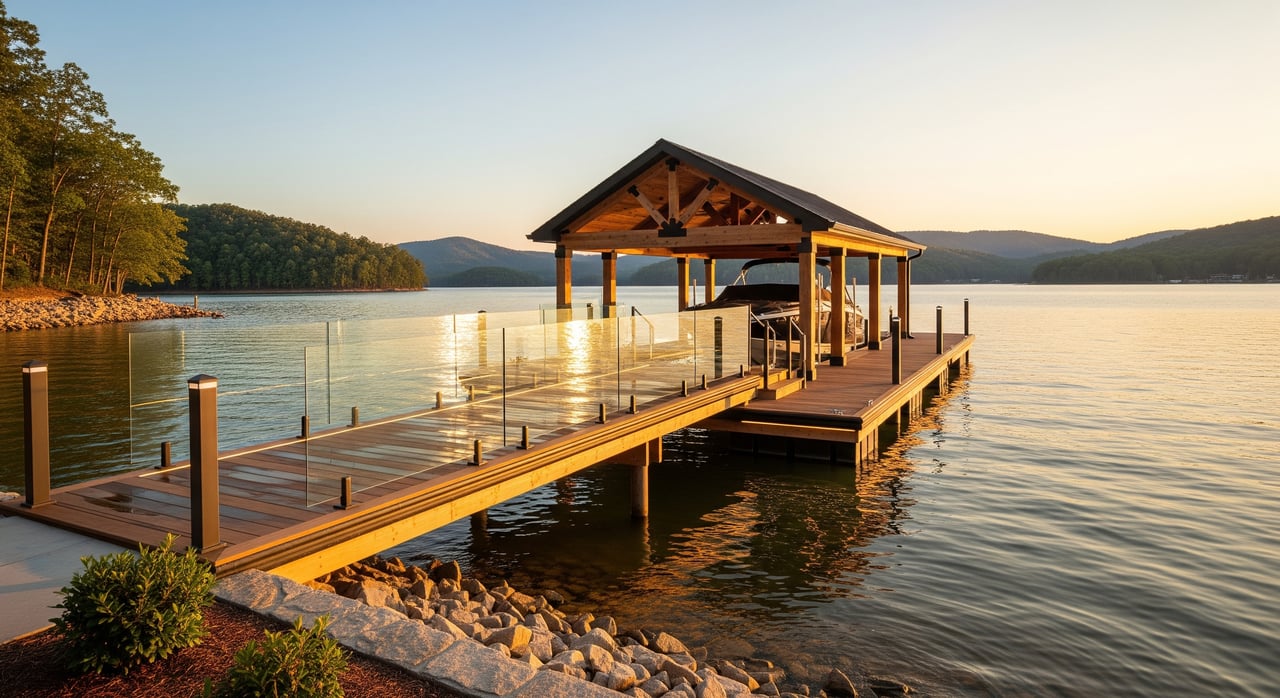
Are you comparing waterfront lots or homes around Salem on Lake Keowee and wondering which dock or shoreline setup is best? You are not alone. The right features can shape your time on the water, simplify maintenance, and support resale value. In this guide, you will learn how covered docks, lifts, deep-water slips, shoreline protection, and gentle slopes play out specifically in Salem’s coves, plus what to verify before you buy or upgrade. Let’s dive in.
Covered docks: protection and permitting
A covered dock gives your boat shade and protection from sun and rain, which many buyers value for year-round use. Roofs also allow for lighting and storage, adding convenience. The trade-off is higher upfront cost and maintenance because roofs add wind load and call for stronger pilings and proper permits.
Before you buy, review the dock’s age, roof material, and electrical components. Ask for permit history and any inspection or repair records. On Lake Keowee, dock size, placement, and roof structures generally require authorization under Duke Energy’s Shoreline Management Plan, so confirm documentation is in place.
Boat lifts: less wear, easier launching
A lift keeps your boat out of the water, protects the hull, and makes launching simple. Options range from single-boat and pontoon lifts to personal watercraft lifts. These features are a top draw for boat owners comparing Salem properties.
Check lift capacity against your boat’s weight and draft, and verify power supply and wiring on the dock. Ask about manufacturer serviceability, winterization steps, and maintenance records. Electrical work should be code-compliant and in good condition.
Deep-water slips: year-round access
A “deep-water” slip lets you dock during typical low-pool periods without grounding. On Lake Keowee, depths vary widely from cove to cove, especially around shallow points and underwater ledges.
Confirm actual bottom depth at the dock during low-pool conditions and along the route to the main lake. Compare that depth to your boat’s draft. For context, you can request historical pool-level information from Duke Energy and ask local marinas about specific coves near Salem.
Riprap and shoreline armor
Riprap is rock placed along the bank to control erosion and protect docks. It is durable and effective where wakes and wind exposure are higher. On the flip side, it can affect natural shoreline habitat and may require more involved approvals.
Before installing, consider whether a living shoreline approach can work. Techniques like native vegetation, graded benches, and coir logs can reduce environmental impacts while stabilizing soil. Any significant shoreline hardening typically requires authorization, and standards can include erosion and sediment controls during construction.
Gentle slopes and natural shores
Gentle slopes make it easy to swim, launch kayaks, and enjoy the water. Many buyers love the look and feel of a natural shoreline with native plants. The trade-off is higher erosion risk without the right stabilization, and longer walkways may be needed to reach navigable depth.
If you prefer a manicured look, plan for smart vegetation management that still protects the bank. In neighborhoods with covenants, dock sizes or covered roofs might be limited, so always verify HOA rules.
Salem cove factors that influence value
- Exposure and wind: Docks facing prevailing winds or wider water can see more wave action and wear. Sheltered coves are calmer but can be shallower.
- Boat traffic: Sites near busy channels may need sturdier anchoring or riprap. Quieter coves reduce wake but may add minutes to your run to open water.
- Orientation and sun: Roofed docks add shade; orientation influences afternoon comfort and glare.
- Neighborhood rules: Some communities restrict covered docks, limit footprints, or require specific materials and colors.
Buyer checklist: verify before you write the offer
- Documentation
- Duke Energy authorizations and permits for the dock, lift, and any shoreline work
- Oconee County permits and any HOA approvals
- Dock age, materials, past repairs, and lift service records
- Depth measurements at low-pool vs. your boat’s draft
- Physical condition
- Pilings: signs of rot, corrosion, or looseness
- Decking and structure: sagging, wear, or past patchwork
- Roof and lift: proper operation, visible condition
- Electrical: GFCI protection, licensed installation, clean wiring
- Shoreline: erosion, vegetation health, prior riprap quality
- Access: safe steps, handrails, walkway condition, and ease of emergency access
- Context
- Neighbor docks and setbacks: any encroachment concerns
- Insurance: check requirements for electrical and dock inspections
Smart upgrades for Salem sellers
- High-impact, lower-complexity improvements
- Repair or replace worn decking, tighten or replace hardware, and document the work
- Add or upgrade a boat lift if existing power and authorizations allow
- Improve safe access with sturdy walkways, lighting, and handrails
- Upgrades that often need more approvals
- New dock roofs or enlarging a footprint
- Major riprap or seawall projects
Always confirm Duke Energy SMP rules and Oconee County requirements before investing. Unpermitted work can delay or derail a sale.
Timelines, costs, and contractors
Authorizations can take weeks to months depending on project type and season. Material choices matter for upkeep. Aluminum and composite decking reduce maintenance compared to untreated wood, and stainless or galvanized hardware holds up better in lake conditions.
Choose marine contractors with Lake Keowee experience and familiarity with Duke Energy approvals. Obtain multiple quotes and ask how they handle erosion and sediment controls during construction.
A simple project timeline to expect
- Feasibility and site survey: 1 to 2 weeks
- Pre-application chat with Duke Energy: varies
- Permit submissions to Duke Energy and Oconee County: weeks to months
- Contractor selection and materials ordering: weeks
- Construction window: weather and water-level dependent
- Final inspections and closeout documentation
Environmental best practices that pay off
- Favor living shoreline techniques where practical to support habitat
- Use native plants to stabilize banks and reduce runoff
- Limit impervious surfaces near the water’s edge
- Keep the water clear during projects with erosion and sediment controls
Who to contact about permits and rules
- Duke Energy Lake Keowee Shoreline Management for dock and shoreline authorizations
- Oconee County Planning and Building for local permits and erosion control
- South Carolina environmental or natural resource agencies for water quality considerations
- U.S. Army Corps of Engineers for projects that may affect federally regulated waters or wetlands
The bottom line for Salem buyers and sellers
The best dock and shoreline setup is the one that fits your boating style, the specific cove conditions, and the rules that apply. Covered docks and lifts add everyday convenience and buyer appeal. Deep-water access is a difference-maker for year-round use. Thoughtful shoreline protection preserves your bank, your dock, and the lake’s natural beauty.
If you are weighing options on a Salem property or planning upgrades before you list, tap a local guide who lives this every day. For clear advice, vetted contractors, and smooth coordination from first showing to close, connect with Amy Twitty.
FAQs
Do I need permission to add or modify a dock on Lake Keowee?
- Yes. Duke Energy typically requires authorization for docks and shoreline work, and Oconee County permits may also apply. Verify approvals before starting.
Will a covered dock or lift help resale value around Salem?
- Often yes, especially for boat owners. Condition, documentation, and neighborhood compatibility shape the premium buyers are willing to pay.
How can I confirm a “deep-water” slip for my boat?
- Take depth soundings during low-pool, review historical lake levels, and compare depths to your boat’s draft along the route from dock to open water.
Is riprap always allowed on Lake Keowee shorelines?
- Not always. Riprap generally needs authorization and may have conditions. Consider living shoreline techniques where feasible.
Who inspects docks and lifts before closing?
- Licensed marine contractors typically inspect condition and operation. Some insurers require proof of compliant electrical and periodic inspections.
