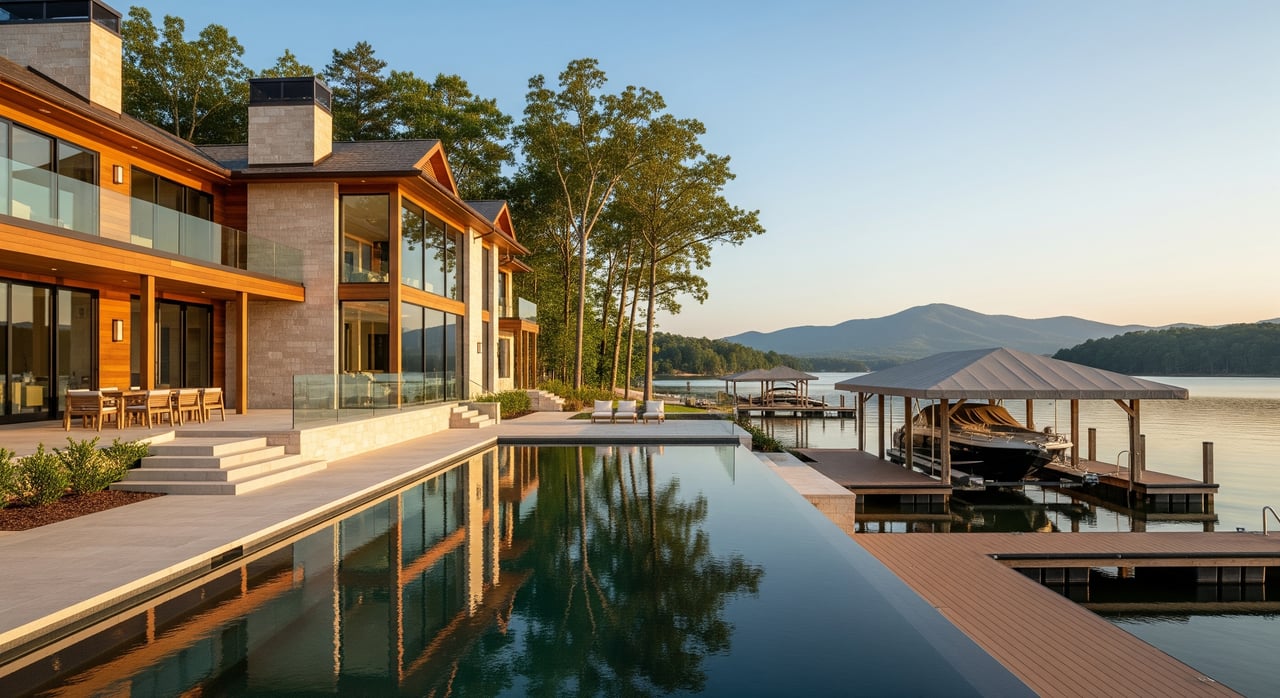
Dreaming about a Lake Keowee escape but unsure how to finance it when prices push past standard loan limits? You are not alone. Many buyers find that lakefront values and unique features mean a jumbo mortgage is the right fit for a second home here. In this guide, you will learn what counts as a jumbo loan, what lenders expect for second homes, how appraisals work on waterfront properties, and how to plan your timeline and budget with confidence. Let’s dive in.
What counts as a jumbo loan in Oconee County
A jumbo loan is any mortgage that exceeds the conforming loan limit set by the Federal Housing Finance Agency. Because limits change each year and vary by county, your first step is to check the current FHFA conforming loan limit for Oconee County using the official map from the FHFA Conforming Loan Limits Map. If your required loan amount is above that limit, you will be in jumbo territory.
On Lake Keowee, many properties are lakefront or lake-access with views, docks, and shoreline improvements that increase value. Those features help your lifestyle and long-term enjoyment, but they also raise the chance that your purchase will require a jumbo product.
Second home vs. investment property
Lenders define a second home as a place you occupy part of the year and do not use primarily as a rental. Underwriting for second homes is usually a bit stricter than for primary residences.
- If you plan to rent the home regularly, especially short term, lenders may classify it as an investment property and apply different rules, higher down payments, and different rates.
- Some lenders also review distance between your primary residence and the second home to confirm true second-home use.
- Community rules matter. Neighborhoods around Lake Keowee, including gated communities like Keowee Key, often have HOA or POA restrictions on docks and rentals. Those restrictions can influence lender treatment of the property, so review them early.
What lenders look for on jumbo second-home loans
Jumbo second-home loans are more detailed than standard conforming loans. Plan ahead for the following common requirements.
Down payment and loan-to-value
- Expect a down payment of 20% to 30% for many jumbo second-home loans. Some lenders may ask for more based on credit and loan size.
- Lower down payments can exist through select portfolio lenders, but they often require strong credit and reserves.
Credit score and history
- A conservative planning range is a 700+ credit score. Some lenders look for 720 to 740 or higher on larger loans.
- Lenders will review your full credit profile, including any late payments or recent large deposits.
Debt-to-income and reserves
- Jumbo underwriters often target debt-to-income at or below 43%. Compensating factors may allow some flexibility.
- Reserve funds are a key factor for second homes. Many lenders require 6 to 12 months of principal, interest, taxes, and insurance in liquid reserves. Larger loans or weaker credit can push that higher.
Documentation and income verification
- Full documentation is standard: recent pay stubs, W-2s, bank statements, and for self-employed buyers, two years of tax returns.
- If your income is non-traditional, some specialized lenders offer alternative documentation options. Expect more scrutiny for jumbo sizes.
Rates and loan options
- Jumbo rates can be similar to or modestly higher than conforming rates depending on market conditions.
- You can choose from fixed-rate jumbos, adjustable-rate mortgages, and portfolio loans held by banks that may be more flexible with waterfront nuances.
Occupancy and rental rules
- Second homes must be used by you. Regular short-term rental activity can change the classification to investment and affect terms.
- Ask your lender to put rental and occupancy rules in writing so you can plan accordingly.
Appraisals for Lake Keowee waterfront homes
Waterfront appraisals are different. Fewer true lakefront sales and unique shoreline features can make valuation more complex and subjective.
What drives value on the lake
- View quality, water depth, cove versus main channel, lot orientation, privacy, dock type, and lift systems all influence value.
- Appraisers often make significant adjustments for shoreline differences, dock condition, and community amenities like marinas and trails.
How appraisers approach these homes
- Most residential waterfront appraisals rely on the sales comparison approach. The cost approach may matter for newer builds. The income approach is rarely used unless the home is an established rental.
- Expect detailed commentary on seasonality and buyer demand, since Lake Keowee is a resort-oriented market.
Practical tips to support your appraisal
- Provide the appraiser with relevant neighborhood and recent comparable sales data when allowed through your agent.
- Document improvements, dock permits, shoreline stabilization, and community amenities in a simple summary.
- Consider an appraisal gap strategy if you are in a competitive situation where values can vary.
Flood zones, elevation, and insurance basics
Many lakefront properties are evaluated for flood risk. Your lender will order a flood zone determination, and flood insurance may be required if the home is in a Special Flood Hazard Area.
- Use the official FEMA Flood Map Service Center to understand flood risk at the parcel level.
- Some properties need an elevation certificate to set flood insurance premiums. If elevation is low or shoreline erosion is present, underwriting and insurance can be more complex.
- Premiums vary. Inland lakes face different wind and storm risks than the coast, but flood exposure still matters, so get quotes early.
Septic, wells, docks, and shoreline permits
Many Lake Keowee homes rely on private wells and septic systems. Lenders often require verification that these systems function properly.
- Order a full home inspection, septic inspection, and well water test. A failed septic or water-quality issue can delay or derail financing.
- Docks, piers, and shoreline stabilization typically require permits from county and sometimes state agencies. Review the history of permits and confirm transferability.
- For state-level guidance and regulations, consult the South Carolina Department of Health and Environmental Control for septic and well considerations and the South Carolina Department of Natural Resources for shoreline and natural resource topics.
Costs to plan for and your closing timeline
Waterfront jumbos invite a few extra line items and a longer process. Build a buffer into your budget and calendar.
Typical costs
- Down payment: 20% to 30% for most jumbo second-home loans.
- Reserves: 6 to 12 months of PITI, sometimes more on larger loans.
- Closing costs: lender fees, appraisal, title and recording, and attorney fees if used. Expect added costs for septic, well, dock, shoreline, and survey work, plus any needed elevation certificate.
- Insurance: flood insurance if required, with premiums based on risk and elevation.
- For a plain-English overview of closing costs, see the CFPB guide to closing costs.
Timeline
- Jumbo loans often take longer than conforming loans. Plan for 30 to 60 days or more from contract to close.
- Schedule extra time for specialty appraisals, surveys, septic and well inspections, and permit research so your loan can clear underwriting on schedule.
Your Lake Keowee jumbo buyer checklist
Stay organized to reduce surprises and keep your offer strong.
- Get prequalified with a lender experienced in jumbo second-home loans and the Lake Keowee market.
- Ask for written requirements: minimum down payment, reserves, documentation, and any rental or occupancy constraints.
- Price insurance early: homeowners and flood, if applicable. Obtain preliminary quotes to confirm affordability.
- Order inspections: home, septic, well water, dock, and shoreline condition. Follow up on any repairs.
- Confirm permits: verify dock and shoreline permits and whether they transfer with the property.
- Verify flood status: check FEMA maps and determine if an elevation certificate is needed.
- Review HOA or POA covenants: pay attention to rules affecting docks, rentals, and improvements.
- Support your appraisal: provide your agent with data and documentation that can help the appraiser understand the property’s value drivers.
- Build contingencies and buffers: plan for appraisal timing and potential repairs, and allow enough time for underwriting.
Common pitfalls that can derail financing
Avoid last-minute issues that can put your closing at risk.
- Unpermitted or non-transferable docks, boat lifts, or shoreline work.
- Failed septic systems or wells with water-quality issues.
- Flood zone surprises that increase premiums beyond your budget.
- Access or utility complications, especially on private roads or undeveloped parcels.
- HOA or POA restrictions that conflict with lender occupancy or rental rules.
Work with a local Lake Keowee expert
A second home on Lake Keowee is about lifestyle and peace of mind. Financing it should feel the same. With deep local knowledge of docks, covenants, shoreline permitting, and seasonality, you can move from dream to dock day with confidence. If you are relocating or shopping from out of state, you can coordinate virtual tours, inspections, and closing tasks while staying on track with your jumbo lender’s timeline.
When you are ready to explore properties or map out a step-by-step financing plan, connect with Amy Twitty. You will get hyper-local guidance, transparent expectations, and a smooth path from offer to lake life.
FAQs
How much down payment do I need for a Lake Keowee jumbo second home?
- For many jumbo second-home loans, plan on 20% to 30% down, with some lenders requiring more based on loan size and credit.
What reserve funds do jumbo lenders usually require for second homes?
- Many lenders ask for 6 to 12 months of PITI in reserves, and larger loans or weaker profiles may need even more.
Can I use my Lake Keowee home for short-term rentals and still get a second-home loan?
- Regular short-term rentals may cause lenders to classify the property as an investment, which changes underwriting, rates, and down payment requirements.
Are waterfront appraisals harder to pass on Lake Keowee?
- They can be more complex because comparable sales are limited and features vary widely; provide strong documentation and be prepared for an appraisal gap plan.
What local issues most often delay closing on lake properties?
- Unpermitted docks or shoreline work, septic or well problems, flood zone complications, and access or utility issues are common causes of delays.
