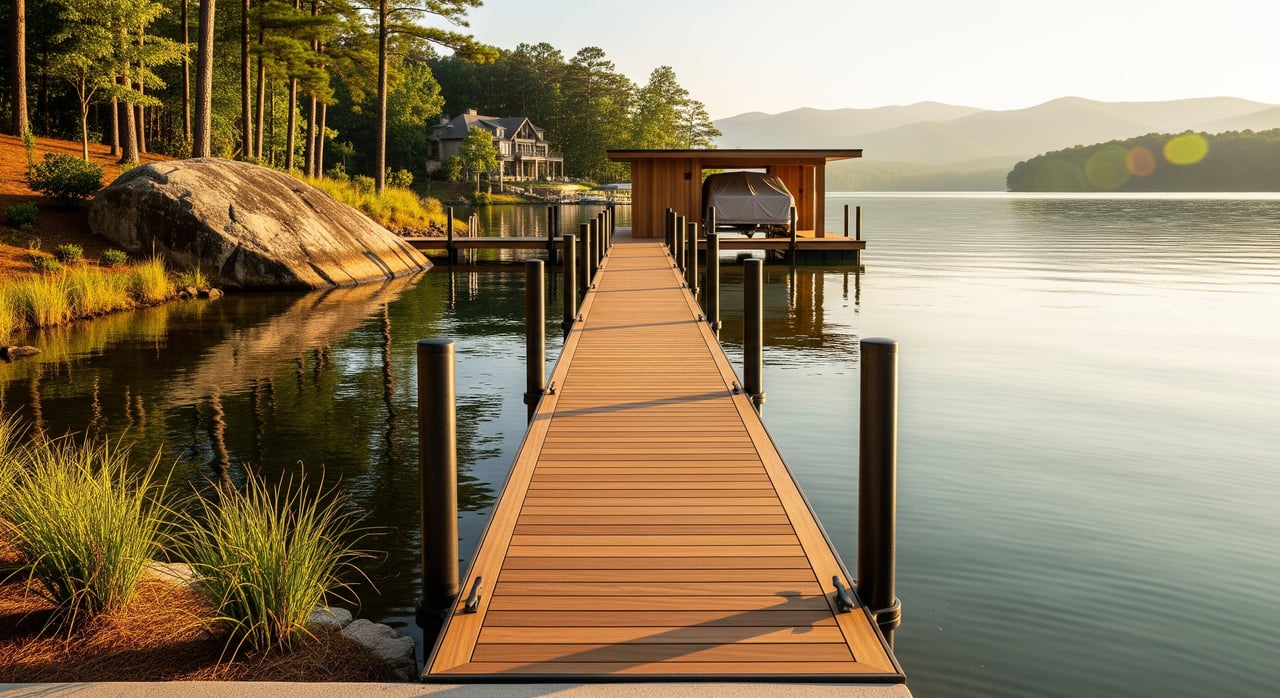
Picture your boat tied up outside your back door, coffee in hand, sunrise over Lake Keowee. If you are buying in The Cliffs at Keowee Vineyards, that vision depends on the right dock permit. The process is detailed, and missing a step can delay your plans. In this guide, you will learn exactly who approves docks, the steps and timelines, what to verify before you buy, and how to avoid common surprises in this community. Let’s dive in.
Who approves Lake Keowee docks
Duke Energy’s shoreline role
Duke Energy is the primary authority for docks and shoreline uses on Lake Keowee under its Shoreline Management Program. You must obtain Duke’s written approval before installing, modifying, or replacing a dock or similar structure. Duke reviews applications for location, size, spacing from neighbors, navigation safety, materials, and protection of vegetation. Expect Duke to require changes if a plan conflicts with spacing rules or navigation areas.
The Cliffs HOA rules
The Cliffs at Keowee Vineyards has its own covenants and Architectural Review Board requirements that may be stricter than Duke’s standards. Community rules can decide whether a property can have a private dock, must use a shared dock, or has a deeded slip at a community marina. You should confirm if dock rights convey with the property and whether HOA approval is required before Duke will consider detailed plans. Always review the HOA’s design standards and any slip fees or transfer policies.
Other agencies to consider
Pickens County planning and building offices regulate land-side work such as grading, retaining walls, utility runs, and access paths. The U.S. Army Corps of Engineers may require federal authorization if your project impacts jurisdictional waters or wetlands, which can trigger additional review. South Carolina DHEC may need to issue a water quality certification when federal permits apply. South Carolina DNR may weigh in on fisheries and environmental considerations. If your plan touches powerlines or easements, coordinate early with utilities to confirm safety clearances.
Step-by-step permitting path
1) Preliminary checks (about 1 to 2 weeks)
- Confirm whether a Duke Energy dock permit already exists for the parcel and if it appears current.
- Verify that the deed grants riparian rights or access to the shoreline.
- Review The Cliffs covenants for dock eligibility, deeded slips, and ARB requirements.
2) Community approvals (about 1 to 4 weeks, often concurrent)
- Submit your dock concept to The Cliffs Architectural Review, if required.
- Determine whether your lot is eligible for a private dock or must use a shared or community slip.
- Clarify any HOA fees, slip transfer steps, or waiting lists.
3) Design and documentation (about 2 to 6 weeks)
- Prepare a site plan that shows property lines, shoreline, proposed dock footprint and orientation, distances from adjacent docks, and upland access.
- Obtain a current survey or certified plot and include coordinates or measured distances as required by Duke.
- If the dock is large or complex, secure engineered plans, especially for covered slips or shoreline stabilization.
4) Duke Energy application and review (about 4 to 8 weeks)
- Submit the shoreline permit application to Duke Energy with all required documents.
- Duke may request revisions, an on-site inspection, or additional details to meet SMP standards.
- Address any requests promptly to keep your application moving.
5) Federal and state reviews if triggered (about 4 to 12+ weeks)
- If your project impacts jurisdictional waters or wetlands, consult the U.S. Army Corps of Engineers to determine if a Nationwide Permit or an Individual Permit applies.
- If a federal permit is needed, South Carolina DHEC may require a 401 water quality certification.
- Run these reviews concurrently with other steps where possible, since they often extend timelines.
6) Approval, conditions, and construction
- Expect permit conditions such as seasonal work windows, rules on materials, lighting, and electrical safety.
- Plan for contractor lead times, which can extend during busy seasons.
- Some permits have expiration dates, require follow-up inspections, or include renewal fees.
Timelines to expect
A straightforward single-slip dock, with clean access and no federal permits, often runs about 6 to 12 weeks from a complete submittal to approval and a start-ready status. If your design needs variances, involves federal or state permits, or the site is complex, plan for 3 to 6 months or longer. Contractor schedules and materials lead times can add weeks. Build in contingency time in your purchase and move-in plans, especially if a dock is central to your lake lifestyle.
Key shoreline rules to anticipate
While specifics come from the current Shoreline Management Program, you can expect a few common restrictions:
- Written approval is required before any construction or installation on the shoreline or in the water.
- There are standard limits on dock length, walkway width, total square footage, and roofed areas.
- Location rules address minimum spacing from other docks and separation from navigation channels and marinas.
- Fueling and hazardous storage on docks are restricted, and waste discharge is prohibited.
- Certain materials, lighting, and electrical standards may be required for safety and environmental protection.
- Vegetation buffers and limits on shoreline alteration are typical. Extra permits may be needed for riprap or retaining walls.
Buyer due diligence checklist for The Cliffs
Use this checklist before you commit to a home or lot in The Cliffs at Keowee Vineyards.
Property and title
- Get the recorded plat and deed language that define riparian or shoreline access rights.
- Confirm whether the property includes a deeded slip or reserved community slip, and whether it transfers with the sale.
- Identify any easements, restrictions, or covenants that limit docks or shoreline access.
- Obtain a recent survey that shows the upland boundary and any easements.
Existing dock and permits
- If a dock exists, request the Duke Energy permit or license and the permit number.
- Confirm whether the permit is issued to the owner and whether it can be transferred or must be reassigned.
- Ask Duke if there are any recorded violations or compliance issues.
- Verify that the dock matches the permitted plans as built.
- If no dock exists, confirm eligibility for a private dock under Duke and The Cliffs rules.
Community and HOA
- Review The Cliffs ARB guidelines and dock policies. Confirm if private docks are allowed, or if shared docks and marinas apply.
- Ask about any HOA fees, slip rental fees, or transfer fees related to docks.
- Check for waiting lists or lotteries for community slips.
Environmental and regulatory
- Look for wetlands or sensitive shoreline areas that might trigger extra permits.
- Confirm whether past stabilization, riprap, or retaining walls were permitted, and whether new work will need approval.
- Check Pickens County requirements for grading, tree removal, and land-side improvements.
Technical and buildability
- Evaluate slope, water depth at the proposed dock location, and bank composition. A surveyor or dock contractor can help.
- Match your intended boat type and length to an appropriate dock plan.
- Plan for electrical service to the dock and verify safety clearances near powerlines.
- Request contractor input on build windows and seasonal constraints.
Timing and costs
- Request current schedules of permit fees, HOA administrative fees, and slip transfer costs.
- Obtain written contractor quotes that include mobilization, materials, and permit assistance.
- Budget for plan changes or resubmittals if Duke requests modifications.
Questions to ask the seller or listing agent
- Can you provide a copy of the Duke Energy dock permit or written confirmation that none exists?
- Is the dock or special slip included in the sale, and is it transferable?
- Has the property had any shoreline violations with Duke or the HOA?
- Have there been any shoreline modifications, retaining walls, or stabilization projects, and were they permitted?
Common pitfalls to avoid
- Assuming a dock is allowed without written confirmation. Always verify with Duke and the HOA.
- Relying on verbal assurances from a seller or neighbor. You need documents.
- Overlooking deed language. Ambiguous riparian rights can make a new dock impractical.
- Crowding issues. Proximity to other docks or navigation areas can force redesign or denial.
- Starting work before permits are in hand. Unpermitted structures can face fines or removal orders.
- Skipping federal or state reviews when they apply. This can create long delays and enforcement risks.
Smart strategies if you want to act this season
- Start with documents. Request the Duke permit, deed language, recent survey, and HOA rules as early as possible.
- Add a shoreline or dock contingency to your offer. Require permit documentation and confirmation of eligibility or slip transferability.
- Engage a local dock contractor early. A qualified team can flag design issues, estimate timelines, and coordinate with Duke and other reviewers.
- Ask the HOA about seasonal windows or scheduled marina work that could impact your timing.
- Build in buffer time. Even straightforward approvals often take several weeks. Complex sites can take months.
- If a dock is essential, consider making closing contingent on an approved Duke permit or formal transfer of an existing permit.
Who to contact first
- Duke Energy shoreline management staff for Lake Keowee regarding permits and SMP standards.
- The Cliffs at Keowee Vineyards HOA and ARB for community dock rules and approvals.
- Pickens County Planning and Building Department for land-side permits and inspections.
- U.S. Army Corps of Engineers, Charleston District for federal permit questions.
- South Carolina DHEC for water quality and related environmental permits.
- A licensed local dock contractor and a licensed surveyor for site plans and as-built verification.
Ready to explore The Cliffs at Keowee Vineyards?
If a private dock or deeded slip is part of your Lake Keowee dream, the right plan will get you there with fewer surprises. With neighborhood-level experience and a hands-on process, you can move from offer to launch day with confidence. If you are weighing lots versus existing homes, comparing slip options, or want a second opinion on a permit path, reach out to Amy Twitty for local guidance and full-service buyer representation. Start the conversation with Amy Twitty.
FAQs
How do Lake Keowee dock permits work at The Cliffs?
- Duke Energy approves shoreline structures, and The Cliffs HOA can add stricter design and use standards, so you need both to align before building.
Can I rely on a seller’s word that a dock is allowed?
- No, you should verify with Duke Energy and obtain HOA documentation, since oral promises are not substitutes for written permits.
Are existing Duke dock permits transferable when I buy?
- Policies vary by permit, so you should confirm the permit terms and ask Duke whether an assignment or new application is required.
How long does a typical permit take on Lake Keowee?
- Straightforward approvals often take about 4 to 8 weeks from a complete application, while projects needing federal or state review can take several months.
What happens if a dock was built without a permit?
- Unpermitted docks can face retroactive permitting, required modifications, or removal, which is why early verification is essential.
Who pays for permitting and dock construction in a sale?
- The property owner usually covers permitting and construction, but you should spell out responsibilities in the purchase agreement.
