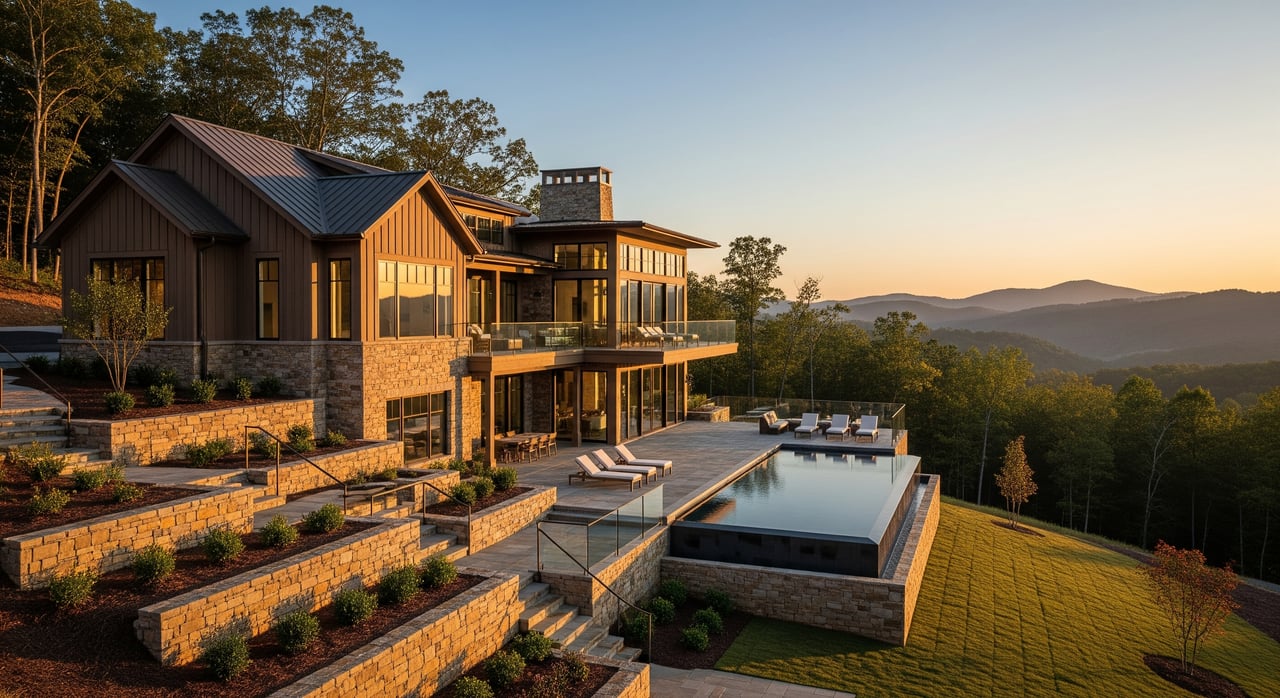
If you own or are eyeing a hillside lot near West Union, you have a real advantage: views, privacy, breezes, and the chance for a daylight or walkout lower level. You also have a few challenges to plan for, like drainage, driveway slope, and foundation choices. This guide gives you a clear, local path from raw land to a well-designed, buildable plan.
Sloped Lot Design Near West Union
West Union sits in the Piedmont foothills, with many home sites stepping over small hills and benches. Elevations commonly range near 900 to 1,050 feet, which creates noticeable relief inside a single parcel based on local topo mapping. The climate is humid subtropical, with about 60 inches of annual rainfall and winter lows that place the area in USDA zones 8a to 8b. Heavy rain events are a major design driver for drainage and erosion control per state climate data.
The good news: with smart planning, you can work with the slope, not against it, to maximize livability and keep costs in check.
Evaluate the Slope and Site
Grade and Terrain Basics
- Measure slope early with a topographic survey. The percent slope, shape of the hill, and the direction of fall all impact the home’s layout and cost.
- Long, gentle slopes often fit stepped foundations and light grading. Short, steep drops may favor walkout basements or pier systems.
- Ask your designer to overlay the topo on your concept plan to avoid deep cuts and tall fill slopes.
Soils and Drainage Patterns
- Order a soils report if the lot has appreciable slope or unknown subsurface conditions. A geotechnical investigation can identify bearing capacity, groundwater, and any stability concerns. You can preview mapped soils using the USDA Web Soil Survey, then confirm in the field with a geotech see USDA Web Soil Survey.
- Map natural drainage paths before you draw the house box. Plan positive fall away from the foundation, and direct flow to stable, vegetated outlets.
Access and Driveway Feasibility
- Check frontage width, turning radii for delivery trucks, and where a driveway can meet the road safely. If the drive connects to a state highway, you may need an SCDOT encroachment permit and must meet sight distance and culvert rules see SCDOT permits.
- Many jurisdictions target residential driveway grades near 10 to 15 percent, with flatter transitions at the road. Confirm local standards early.
Views, Sun, and Privacy Mapping
- Walk the site morning and late afternoon. Mark view corridors, key trees, and neighboring sightlines.
- Rotate living spaces to capture views while balancing summer sun and winter light.
Choose the Right Foundation
Daylight/Walkout Basement Advantages
- A downhill walkout can add high-value space at a lower cost per square foot. It also creates easy access to patios and yards on the low side.
- Plan for robust waterproofing, footing drains, and water diversion uphill of the foundation. Proper egress and natural light are key to making the lower level feel like main living.
Stepped Footings and Stem Walls
- Stepped footings allow the foundation to follow natural grade. This reduces deep excavation and helps keep floor levels consistent.
- Pair with careful grading to avoid tall exposed walls on the downhill side.
Crawlspace and Pier Options
- Elevated crawlspaces or pier-and-beam systems can reduce cut and fill and allow airflow beneath the home.
- Piers or drilled shafts are useful on steeper terrain or where you want to “touch lightly” on the land. These systems need structural engineering but can save on massive earthwork.
Retaining Walls: Use and Limits
- Retaining walls should be designed with drainage in mind: weep holes, gravel backfill, and perforated drains are standard best practices.
- The International Residential Code triggers engineered design for many walls retaining over 4 feet of unbalanced fill or supporting surcharges like driveways or structures. Expect permitting and engineered plans for significant walls overview of common thresholds.
Cut-and-Fill Tradeoffs
- Creating a flat pad can simplify framing but often raises costs for hauling, compaction, and walls. Cutting deep can also create water issues.
- Designing to the slope with stepped forms or walkouts typically reduces site disturbance and blends the home into the hillside.
Manage Water and Erosion
Surface and Subsurface Drainage
- Grade at least several feet of positive fall away from all foundations. Use shallow swales to route runoff around the home and into stable outlets.
- Add subsurface drains behind walls and at the toe of steep cuts where seepage is likely. Poor drainage causes most wall failures and slope problems. Land grading best practices support benching and controlled flow paths see land grading guidance.
Erosion Control and Stabilization
- During construction, expect silt fence, wattles, stabilized entrances, and staged earthwork. Disturb only what you can stabilize quickly.
- Projects that disturb 1 acre or more may require NPDES stormwater permit coverage through SCDHEC, including erosion and sediment control plans SCDHEC stormwater guidance.
Roof Runoff and Hardscape Grading
- Collect roof water with gutters and downspouts. Discharge to splash blocks, drains, rain gardens, or level spreaders that dissipate energy.
- Ensure patios, walks, and driveways slope to drain and tie into the site plan.
Onsite Wastewater on Slopes
- If you are off sewer, septic system placement depends on slope, soil depth, and percolation. Steep or shallow soils can limit options. Plan early for evaluations and permitting through SCDHEC septic program overview.
Plan Driveway and Garage Access
Driveway Slope and Turning Basics
- Aim for comfortable grades and smooth transitions at the roadway. Use curves and switchbacks on steeper sites to keep slopes manageable.
- If your driveway connects to a state road, coordinate culverts, pipe sizes, and apron design with SCDOT during planning SCDOT permits.
Garage Placement Options
- Under-house garages work well on downhill sites, creating main-level living above. Side-entry garages help with curb appeal on sloping streets.
- For uphill lots, consider a street-level garage with interior steps down to living areas or a split-level plan.
Construction Access and Staging
- Identify temporary access routes for concrete trucks and cranes. Stabilize staging areas to minimize rutting and runoff.
- Protect tree roots and planned landscape zones by fencing them before excavation starts.
Design Outdoor Living on Slopes
Terraces, Steps, and Landings
- Create a sequence of small, usable terraces instead of one large cut. Benches reduce runoff speed and make maintenance easier grading and benching concept.
- Add wide landings and handrails for comfort and safety.
Multi-Level Decks and Patios
- Structural decks bridge grade changes with less earthwork. Under-deck spaces can become shaded patios or storage.
- Cut-in patios feel grounded but need proper retaining and drainage. Use permeable pavers where practical to reduce runoff.
Paths and Waterfront Access Planning
- For steep runs, design gentle switchbacks with stable treads, risers, and guardrails as needed. Use textured materials for traction.
- Where paths meet the water or a stream, expect setbacks and possible permits. Coordinate early with relevant agencies environmental permitting overview.
Planting for Stability and Low Care
- Choose deep-rooted groundcovers, native grasses, and shrubs to hold soil. Clemson Extension’s Carolina Yards resources are great for species ideas in Oconee County planting guidance and HGIC groundcovers.
- Mulch and erosion control blankets help establish plants on steeper faces.
Safety and Accessibility
- Layer in step lighting, sturdy handrails, and even gradual ramps where possible. Plan for year-round usability with shaded seating and winter sun.
Optimize Views and Natural Light
Room Orientation and Window Strategy
- Face main living areas toward the best views. Balance large glass with overhangs and low-e glazing to control glare and heat gain.
- Place service spaces uphill and “public” rooms toward the open side of the lot.
Rooflines and Massing on a Hillside
- Split levels, stepped rooflines, and staggered forms sit more gently on the land. They also help reduce the visual height downhill.
Wind, Noise, and Comfort
- Map prevailing breezes and nearby noise sources. Plant windbreaks where needed and choose durable exterior materials that perform in wet summers and occasional winter freezes local climate context.
Budget, Timeline, and Team
Site Work Allowances and Contingency
- Big cost drivers on slopes include earthwork, retaining walls, drainage, driveway construction, and access. Retaining wall costs vary widely with height and complexity, often rising quickly for tall structural walls. National guides show broad ranges, but local bids are essential example cost context.
- Set a contingency for rock, soil surprises, and extra stabilization. Expect more hauling and erosion control than a flat lot.
Surveys, Geotech, and Engineering
- Start with a boundary and topo survey. Add a geotechnical report for moderate to steep sites or if walls and deep cuts are planned. The geotech will recommend foundation types, bearing depths, lateral pressures, and drainage details.
- Engage a structural or civil engineer to design foundations and any significant walls, consistent with code expectations for retained heights and surcharges engineering threshold context.
Selecting a Slope-Savvy Builder
- Ask for hillside references, photos, and contacts for the excavation and retaining wall subcontractors.
- Look for builders who schedule erosion controls first, not last, and who coordinate closely with the engineer.
HOA/ARC and Permitting Steps
- Confirm HOA or Architectural Review Committee rules for driveway slope, walls, and exterior materials.
- Oconee County Building Codes handles permits and inspections. The county enforces state-adopted codes, such as the IRC/IBC series in use locally. Start with a pre-application call to align on submittal requirements and inspection steps Oconee permitting overview and adopted codes info.
- For land disturbance of 1 acre or more, review SCDHEC stormwater requirements stormwater permit info. If you will be on septic, coordinate site evaluations through SCDHEC early septic guidance.
Avoid Common Sloped-Lot Mistakes
Underestimating Site Prep
- Do not budget only for house square footage. Earthwork, access, utilities, and stabilization can rival or exceed vertical costs on some sites.
Neglecting Drainage Details
- Water is the number one risk. Integrate drainage from day one, including subsurface components and safe, stable outlets for stormwater grading and drainage concepts.
Overreliance on Retaining Walls
- Use multiple low terraces where you can, not one massive wall. Tall walls often need engineering, permitting, and robust drainage engineering overview.
Oversteep or Awkward Driveways
- A difficult driveway affects daily life and resale. Design curves, landings, and safe sightlines. Confirm permits if connecting to a state road SCDOT permits.
Leverage a Local Sloped-Lot Expert
Lot Selection and Due Diligence
- Before you commit, walk candidate lots with a pro who understands grades, access, utilities, and likely permit paths. In Oconee County, early talks with Building Codes help you avoid surprises on thresholds for walls, grading, and inspections county permits page.
Builder and Designer Introductions
- A coordinated team saves time and change orders. Pair a hillside-savvy builder with a structural engineer and geotech from the start.
Remote Coordination and Walkthroughs
- If you are out of state, schedule virtual site walks during key milestones: staking, rough grading, foundation forming, and drainage installation.
Next Steps for Your Sloped Lot
Designing for a hillside near West Union is about aligning the home to the land and managing water from the first sketch. Get your topo and geotech early, choose the right foundation, and plan driveways, drainage, and outdoor spaces as one integrated system. For permitting, coordinate with Oconee County on adopted codes and submittals county overview, with SCDHEC on stormwater and septic as applicable stormwater and septic, and with SCDOT on any state-road driveways encroachment permits.
If you want help matching a lot to your goals or need introductions to slope-savvy builders and engineers, start a conversation with Amy Twitty. Amy’s local experience with Lake Keowee and Upstate lots can streamline due diligence, coordinate site walks, and keep your project on track from offer to groundbreaking.
FAQs
How steep is too steep for a homesite near West Union?
- There is no single cutoff. Many practitioners add extra engineering above about 15 percent slope, and slopes near 30 percent or more often trigger formal review. Get a topo and a geotech for clear guidance.
Do I need a geotechnical report for my lot?
- For moderate or steep slopes, or if you plan retaining walls or deep cuts, a geotech report is strongly recommended. It guides foundation type, drainage, and wall design and can save money by preventing failures.
When do retaining walls require engineering and permits?
- Walls retaining over about 4 feet of unbalanced fill or supporting driveways or structures typically need engineered design and permitting consistent with code expectations engineering context. Always confirm with Oconee County Building Codes.
Do I need a stormwater permit for my build?
- Projects that disturb 1 acre or more commonly require NPDES construction stormwater coverage through SCDHEC, along with erosion control measures permit overview.
What should I budget for retaining walls and grading?
- Costs vary widely by height, access, and engineering. National guides show broad ranges, but tall structural walls can be expensive. Get local contractor bids early for realistic numbers cost context.
Who issues building permits near West Union?
- Oconee County Building Codes handles permits, plan review, and inspections, enforcing the state-adopted IRC/IBC series. Use a pre-application call to clarify requirements permits and codes.
What about septic on a hillside?
- Slope, soil depth, and percolation determine system type and placement. Start with SCDHEC evaluations early to avoid design delays septic program.
Are there special driveway rules if I connect to a state road?
- Yes. You will likely need an SCDOT encroachment permit and must meet sight distance, apron, and culvert standards. Confirm details before design SCDOT encroachment.
